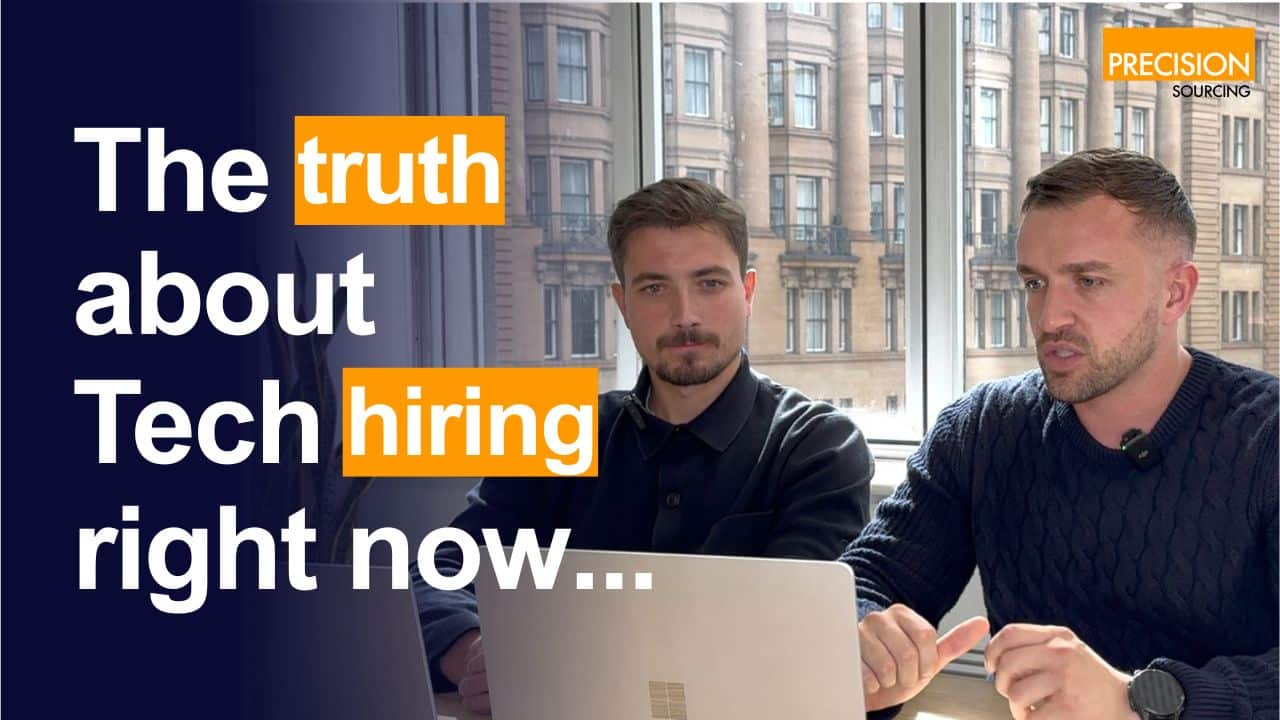
The technology hiring market continues to defy simple narratives.
That was the clear message from our latest Technology Market Report Webinar, hosted by Craig Sibley, Head of Technology and Data Recruitment, and Karim Ben‑Romdhane, who leads our Business Analysis practice. Rather than working through a dense market report, the session focused on practical insight, real hiring patterns and what organisations and candidates should realistically expect as we move through Q4.
What emerged was a picture of a market that remains active, but more disciplined, more selective and far more outcomes‑driven than in previous cycles.
Economic pressure, but continued technology investment
At a macro level, the economic environment remains challenging. Ongoing inflation, successive interest rate rises and broader geopolitical uncertainty continue to weigh on business confidence. Approval processes are tighter and hiring decisions are facing more scrutiny than they did even twelve months ago.
With that being said, technology investment has not stalled.
Across Q3, technology hiring exceeded expectations. Demand remained strong across cloud, cyber, data, ERP, HCM, AI, Salesforce and enterprise platforms. While decision‑making has slowed, particularly in April, organisations are still investing where technology is clearly tied to business‑critical outcomes.
The theme is not hesitation, but prioritisation.
Business Analysts as an early market signal
One of the most telling indicators discussed during the session was activity in the Business Analyst market.
BAs often sit at the front end of transformation, so shifts in demand here tend to signal what is coming next. What we are seeing is sustained demand, but with far greater specificity.
Organisations are hiring in two distinct ways. Some are building internal capability through permanent BA hires to strengthen long‑term delivery maturity. Others are bringing in highly specialised BAs for defined pieces of work, where prior experience in similar programs is non‑negotiable.
Competition has increased as more candidates enter the market, but demand has not disappeared. In fact, project sizes are trending larger again, moving away from short uplift work and towards broader transformation initiatives, particularly in Sydney and Melbourne, with Brisbane and Adelaide continuing to gain momentum.
Project and change investment is becoming more selective
Across project, change and transformation roles, organisations are still investing, but with a sharper lens.
Rather than approving multiple initiatives in parallel, many businesses are funnelling investment into the single most critical program. Projects that demonstrate clear commercial outcomes, whether cost reduction, operational efficiency, automation, customer experience or regulatory compliance, are moving forward. Others are being paused.
This is particularly evident in cloud, data and AI‑related programs. Large enterprises and public sector organisations with funded, long‑term roadmaps remain the most consistent sources of demand. Mid‑market organisations, by contrast, are taking a more cautious approach with slower approvals and tighter headcount controls.
A notable shift is the growing preference for permanent hires in key delivery and leadership roles, particularly across project management, architecture and change. Many organisations are prioritising continuity and internal capability over reliance on contractors and external consultancies.

Cloud, DevOps and platform optimisation in focus
In cloud and DevOps, the conversation has shifted.
Many organisations have completed their initial cloud migrations and are now focused on optimisation, cost control, governance, security and stability. As a result, demand is strongest for senior engineers who can operate across complex environments and communicate effectively with business stakeholders.
Azure continues to dominate demand, particularly across platform engineering and cloud transformation programs. While the mid‑level market is more competitive, senior talent with both technical depth and commercial awareness remains in short supply.
AI is increasingly part of the conversation, not as a standalone role requirement, but as an expected area of awareness across cloud and platform teams.
ERP, HCM and Dynamics gaining momentum
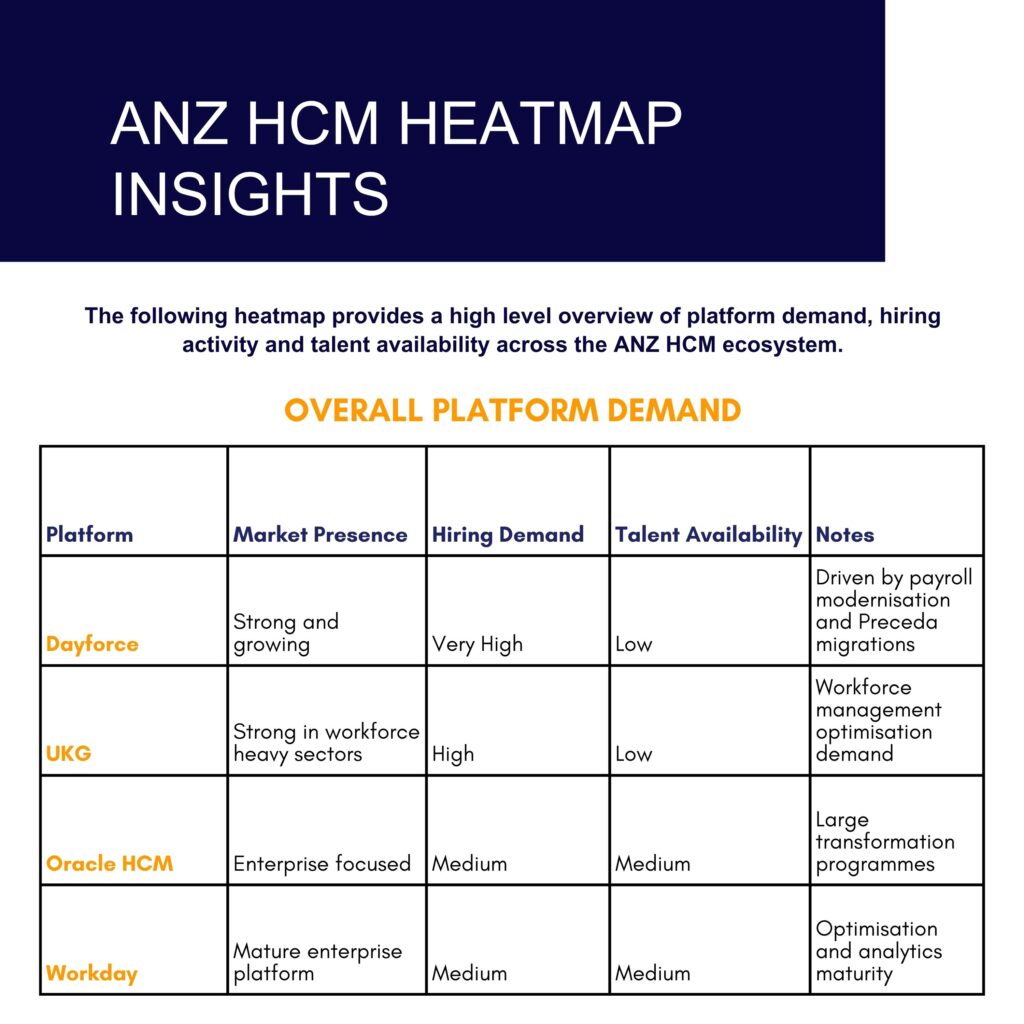
Activity across ERP and HCM platforms remains steady, with a noticeable shift away from heavy consultancy reliance towards internal capability building.
In the HCM and HR systems space, organisations are investing in day‑four capability, optimisation and workforce maturity rather than large‑scale re‑implementations. UKG continues to see strong demand across workforce‑heavy sectors, with transformation experience commanding premium rates.
Within the Microsoft ecosystem, Dynamics continues to gain traction as organisations pursue cost‑effective ERP and CRM solutions aligned to the broader Microsoft stack. Business Central, Power Platform and automation are driving much of this demand, with adoption among Australian small and mid‑sized businesses continuing to rise.
Cyber and security: steady but selective
Despite high‑profile breaches and heightened awareness, the cyber security market has not expanded as aggressively as many expected. Demand remains strong, but highly selective.
Organisations are prioritising proven capability in areas such as identity and access management, governance, risk and compliance, and security operations. Fixed‑term and contract roles are more common than permanent headcount expansion, reflecting a focus on risk reduction and operational effectiveness rather than large‑scale transformation.

What this means for Q4
As we move further into Q4, the market is showing signs of regaining momentum after a slower April. Organisations are continuing to invest, but hiring decisions are increasingly centred on impact.
The strongest demand is for professionals who can:
- Deliver outcomes quickly
- Navigate complex stakeholder environments
- Bridge technical and commercial conversations
- Operate effectively across transformation programs
For hiring managers, clarity and decisiveness are becoming competitive advantages. Organisations that define requirements well and move efficiently through hiring processes are best positioned to secure top talent.
For candidates, the market rewards depth, relevance and adaptability more than volume. Specialist experience and the ability to demonstrate tangible impact continue to differentiate.
Final thoughts
The Q3 FY 26 Technology Market Report Webinar reinforced a clear message.
The technology market is not contracting, but it is maturing.
Investment is flowing where technology supports business priorities, and hiring decisions are being made with greater intent. For organisations and professionals alike, understanding these shifts is critical to navigating the remainder of the year with confidence.
What’s Next?

Q4 is shaping up to be a critical quarter for technology hiring, with shifting demand, tighter competition and clearer expectations around skills and impact.
Want to stay across what employers are prioritising in the market and where genuine opportunities are emerging?
Keep an eye on our socials so you don’t miss the Q4 session.
These sessions are designed to give candidates practical context, honest insight and a clearer view of how the market is evolving.
Want to learn more or to simply have a chat about the market? Reach out to the Technology team today technology@precisionsourcing.com.au
No related author found.